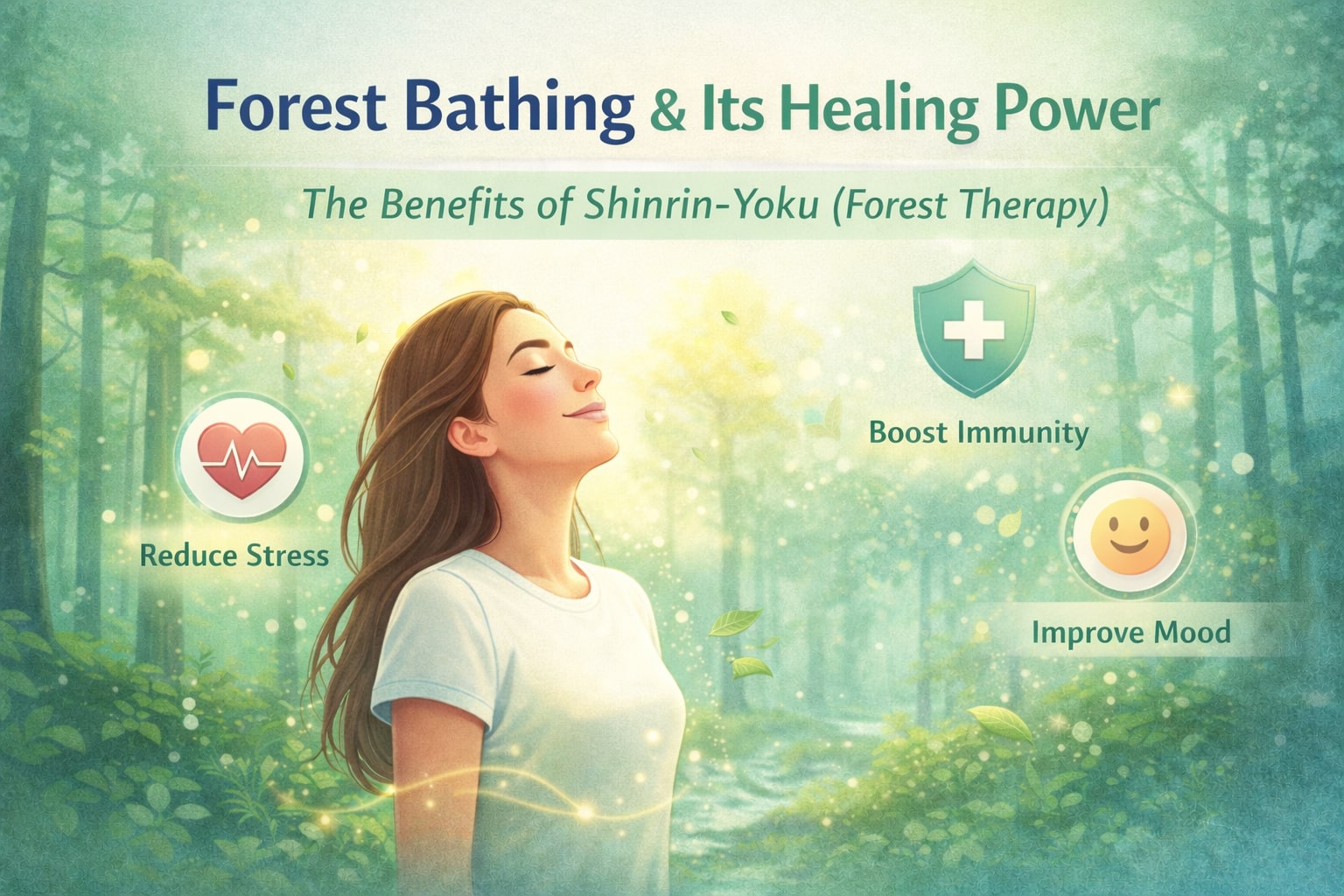
The Science of Forest Medicine
Japanese researchers have identified specific compounds called phytoncides that trees release into the air. When we breathe these in during forest bathing, they trigger a cascade of health benefits including increased NK cell activity, reduced inflammation markers, and improved heart rate variability. Studies show that a single forest bathing session can boost immune function for up to 30 days.
📺 Featured Video

Shinrin Yoku: The Art of Forest Bathing | Short Film
by Nature Therapy
🌲 Forest Bathing: Complete Benefits & Practice Guide
🧠 Proven Science-Backed Benefits
- Stress Reduction: 16% cortisol reduction in just 2 hours
- Immune Boost: 30-day immunity increase from phytoncides
- Blood Pressure: 8.44 mmHg average reduction (systolic)
- Mental Health: 58% anxiety reduction, 40% depression relief
- Focus Enhancement: Improved attention and creativity via "soft fascination"
- Sleep Quality: Better rest through nervous system regulation
- Anti-Cancer: NK cells increase fighting infections and tumors
🌿 Essential Forest Bathing Steps
- Choose Location: Quiet forest, park, or wooded area with diverse trees
- Disconnect: Turn off phone, remove fitness trackers, no cameras
- Engage Senses:
- 👁️ Sight: Notice colors, patterns, light through leaves
- 👂 Sound: Birds, rustling, flowing water
- 👃 Smell: Earth scents, tree aromatics, fresh air
- ✋ Touch: Tree bark, moss, leaves (safely)
- 👅 Taste: Deep breathing of forest air
- Move Slowly: No destination, relaxed pace, frequent stops
- Duration: 2-4 hours ideal, minimum 20 minutes for benefits
🌳 Best Tree Types for Phytoncides
- Coniferous (Pine, Fir, Cedar): Highest phytoncide levels
- Deciduous (Oak, Maple, Birch): Seasonal variety, mindfulness
- Mixed Forests: Combined benefits of both types
- Bamboo: Unique acoustic properties, deeply calming
- Eucalyptus: Strong antimicrobial compounds
🧘 Forest Bathing Exercises to Try
- 5-4-3-2-1 Grounding: Identify 5 sights, 4 touches, 3 sounds, 2 smells, 1 taste
- Tree Meditation: Sit against tree for 10-15 minutes, feel its energy
- Mindful Walking: Extremely slow, conscious steps
- Breathing Exercises: 4-7-8 pattern with forest air
- Nature Journaling: Write observations without judgment
📍 Best Forest Bathing Locations
- National Parks: Yellowstone, Yosemite, Great Smoky Mountains
- Local State Parks: Usually have designated quiet zones
- Botanical Gardens: Urban alternative with diverse plant life
- Arboretums: Curated tree collections, educational value
- Beach Forests: Coastal redwoods, pine forests near water
⏰ Optimal Timing for Forest Bathing
- Early Morning (6-10 AM): Highest phytoncide concentrations
- Golden Hour: Beautiful light, fewer people
- After Rain: Enhanced scents, fresh air, negative ions
- Seasonal Considerations:
- 🌸 Spring: New growth, bird activity, allergen awareness
- ☀️ Summer: Full canopy, peak phytoncides, warm weather
- 🍂 Fall: Color changes, crisp air, mushroom scents
- ❄️ Winter: Evergreen benefits, quiet, unique beauty
🎯 Weekly Forest Bathing Schedule
- Ideal: 2-4 hours once per week
- Minimum: 20 minutes, 3 times per week
- Monthly Intensive: One full day (6+ hours) per month
- Daily Mini: 5-10 minutes in local green space
- Vacation Immersion: Multi-day forest retreats
❌ Common Forest Bathing Mistakes
- Treating as Exercise: Not about calories or step counts
- Rushing: Benefits come from slow, mindful presence
- Overthinking: No "perfect" way to forest bathe
- Technology Use: Phones/cameras break the meditative state
- Weather Perfectionism: Rain and mist enhance the experience
- Safety Neglect: Always inform others, bring water, check for ticks
🌍 Global Forest Bathing Programs
- Japan: 62 designated forest therapy bases nationwide
- South Korea: National healing forest program
- Germany: Forest therapy centers, "Kneipp" treatments
- Finland: Forest wellness, "sisu" cultural integration
- United States: Association of Nature & Forest Therapy certification
- Canada: Wilderness therapy programs, Indigenous practices
📱 Featured Forest Bathing Videos
- "Science of Forest Bathing" by Dr. Li: Research explanation (12 min)
- "Guided Forest Bath Session": Step-by-step practice (25 min)
- "Japanese Shinrin-Yoku Documentary": Cultural background (45 min)
- "Forest Medicine Research": Latest studies overview (18 min)
- "Urban Forest Bathing": City alternatives guide (15 min)
🔬 Key Research Studies
- Environmental International (2019): Cortisol reduction study
- Nippon Medical School: NK cell immune response research
- Journal of Health Psychology: Blood pressure meta-analysis
- International Journal of Environmental Research: Mental health benefits
- Frontiers in Psychology: Attention restoration theory
This ancient practice costs nothing, requires no equipment, and can transform your physical and mental health. Start with just 20 minutes in your nearest green space – your body and mind will thank you! 🌲✨
How to Practice Shinrin-Yoku
Unlike hiking, forest bathing is about moving slowly and engaging all five senses. Start by finding a quiet natural area and disconnecting from technology. Walk aimlessly for 2-4 hours, stopping frequently to touch tree bark, listen to birds, and breathe deeply. The goal is presence, not distance. Even 20 minutes provides measurable benefits for stress reduction.
📺 Featured Video
Forest Bathing | Shinrin-Yoku | Healing in Nature | Short Documentary
by Nature Documentary
Creating Your Forest Bathing Routine
For optimal benefits, practice forest bathing 2-4 hours weekly, or at minimum 20 minutes three times per week. Morning sessions offer the highest phytoncide concentrations. Different seasons provide unique benefits - summer has peak phytoncide levels, while winter offers peaceful contemplation. Urban dwellers can use large parks or botanical gardens as alternatives.