Why Curiosity Is Hard to Resist
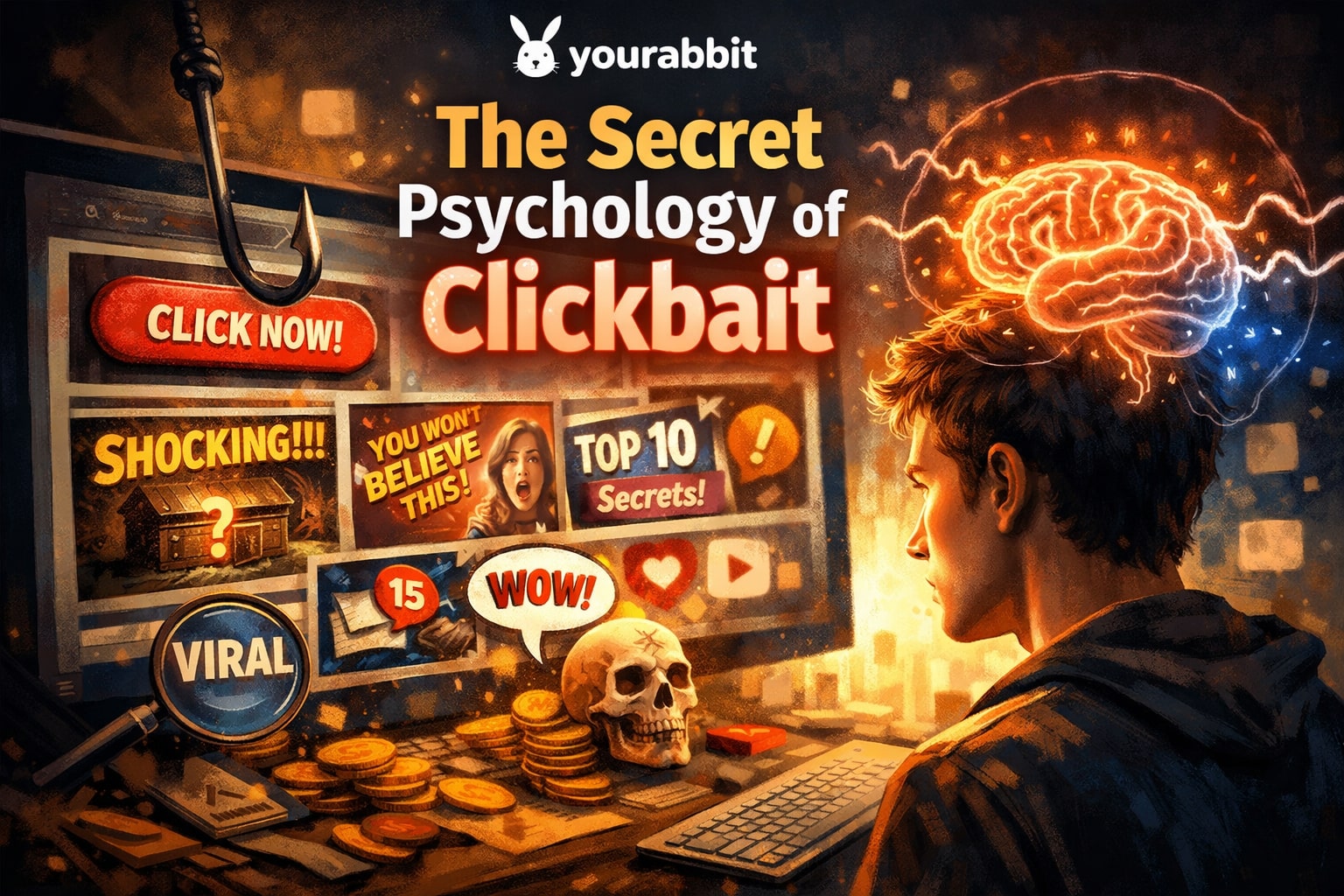
The human brain is wired to seek closure. When we encounter incomplete information, a psychological phenomenon known as the "curiosity gap" activates. This gap represents the space between what we know and what we want to know, and it creates a mild but persistent sense of discomfort.
Clickbait headlines exploit this mechanism with precision. Phrases like "You won't believe what happened next" or "The one thing experts don't want you to know" deliberately withhold key information. The brain, uncomfortable with uncertainty, pushes us toward resolution.
This isn't a character flaw or a sign of gullibility. It's how human cognition evolved. Our ancestors who investigated unusual sounds or investigated changes in their environment were more likely to survive. That same investigative drive now manifests in our digital behavior.
Anticipation plays an equally important role. The moment before clicking, when we imagine what might be revealed, often provides more psychological engagement than the actual content. Headlines are crafted to maximize this anticipatory state, promising transformation, revelation, or emotional impact.
Reward Loops and Attention
The effectiveness of clickbait is deeply connected to how our brains process rewards. When we encounter a compelling headline, the anticipation of discovering something interesting activates the same neural pathways associated with other pleasurable experiences. The click itself becomes part of a behavioral loop.
What makes this particularly effective is the variable nature of the reward. Sometimes the content delivers on its promise; sometimes it doesn't. This unpredictability actually strengthens the behavior, similar to how variable reward schedules work in other contexts.
The attention economy has amplified these dynamics considerably. Content platforms are designed to capture and hold attention, and clickbait has evolved as one of the most effective tools for this purpose. Understanding these dopamine-driven attention loops helps explain why certain content formats have become so prevalent.
Each click, scroll, and share feeds into a larger system optimized for engagement. The psychological principles underlying clickbait aren't new, but their application at scale through digital platforms has created an environment where attention itself has become the primary commodity.
Clickbait and Belief Formation
Beyond simple curiosity, clickbait often targets emotional responses that can influence how we form and maintain beliefs. Headlines that provoke outrage, fear, or validation tend to generate higher engagement than neutral informational content.
This emotional targeting intersects with confirmation bias in significant ways. We're more likely to click on headlines that align with our existing worldview, and the content we consume reinforces those perspectives. Over time, this creates feedback loops where our information diet becomes increasingly tailored to our preexisting beliefs.
The same psychological mechanisms that make clickbait effective also play a role in how misinformation spreads. Emotionally charged content travels faster through networks than careful, nuanced analysis. Understanding these cognitive biases in belief formation provides insight into broader patterns of online information consumption.
It's worth noting that these aren't exclusively negative phenomena. The same psychological drives that make us vulnerable to manipulative content also fuel genuine learning and discovery. The challenge lies in the incentive structures of digital platforms, which often reward engagement over accuracy.