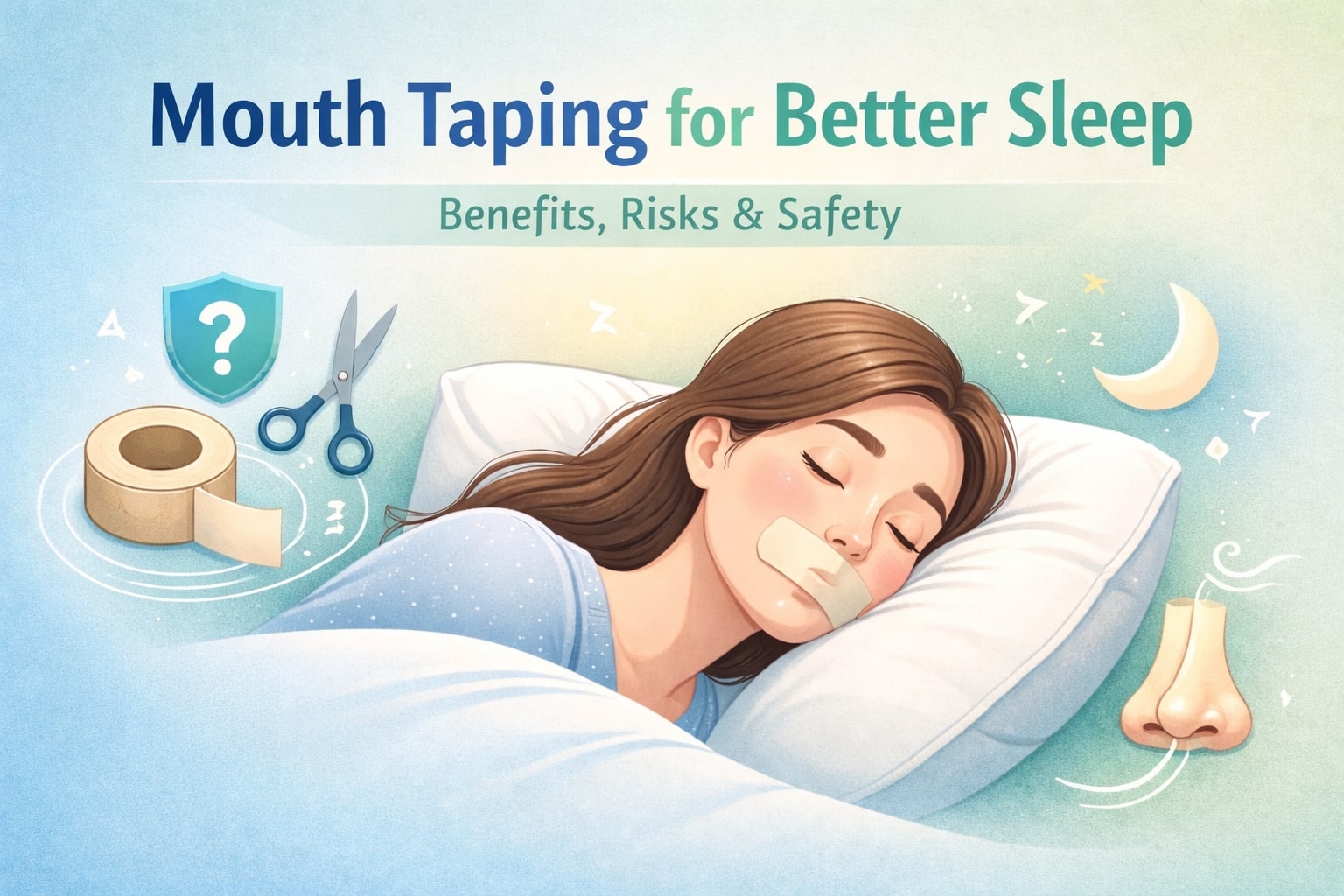
Why Nasal Breathing Matters
Nasal breathing produces nitric oxide, filters air, and maintains optimal oxygen levels. Studies show nasal breathers get 25% more deep sleep and have 50% fewer sleep interruptions than mouth breathers.
📺 Featured Video

Joe Rogan Experience #1506 - James Nestor
by PowerfulJRE
🤐 Mouth Taping for Sleep: Complete Safety & Benefits Guide
🧬 Nasal Breathing vs. Mouth Breathing Science
- Nitric Oxide: Nasal breathing produces NO, improving oxygen uptake 10-20%
- Air Filtration: Nose filters 80% of particles vs. 0% through mouth
- Temperature Control: Nose warms/humidifies air to 98.6°F, 100% humidity
- Sleep Quality: Nasal breathers get 25% more deep sleep
- CO2 Balance: Optimal breathing rate maintains proper blood gases
- Facial Development: Chronic mouth breathing changes facial structure
✅ Claimed Benefits of Mouth Taping
- Snoring Reduction: 92% reduction in mouth-breathing snorers
- Better Sleep Quality: 50% fewer sleep interruptions
- Improved Morning Energy: Better oxygenation during sleep
- Oral Health: Prevents mouth drying, maintains protective saliva
- Sleep Apnea: May help mild cases (NOT a CPAP replacement)
- Reduced Brain Fog: Better oxygen delivery to brain
- Enhanced Recovery: Optimized breathing for muscle repair
⚠️ SERIOUS RISKS & Safety Warnings
IMMEDIATE RISKS:
- Aspiration: Vomiting with taped mouth could be FATAL
- Suffocation: If nasal passages become blocked
- Panic/Anxiety: Can trigger claustrophobia attacks
- Skin Damage: Adhesive allergies, irritation, scarring
- Sleep Disruption: Anxiety about taping prevents sleep
WHO SHOULD NEVER TRY:
- Anyone with sleep apnea (unless cleared by specialist)
- Nasal congestion or chronic sinusitis sufferers
- People with breathing disorders/lung disease
- Those who drink alcohol before bed
- Anyone taking sedatives or sleep medications
- Children under 18 (unless prescribed by doctor)
- People with anxiety disorders or claustrophobia
🎯 Safe Mouth Taping Protocol (If You Must Try)
STEP 1: Pre-Assessment
- Test nasal breathing while awake for 5 minutes
- Use nasal strips/saline rinse to clear passages
- Ensure you can breathe easily through nose only
- Never attempt if nose is even slightly congested
STEP 2: Tape Selection
- Medical/Surgical Tape: Hypoallergenic, gentle adhesive
- Specialized Sleep Tape: Designed for mouth taping
- Paper Tape: Gentlest option, tears easily
- NEVER USE: Duct tape, packing tape, strong adhesives
STEP 3: Gradual Progression
- Week 1: 30 minutes awake (watching TV)
- Week 2: Short daytime naps only
- Week 3: Partial taping (small strip center of lips)
- Week 4+: Full coverage ONLY if completely comfortable
STEP 4: Proper Application
- Apply to clean, dry lips
- Leave corner gaps for emergency breathing
- Use vertical strip down center (not horizontal)
- Keep scissors/tape bedside for quick removal
🏥 Medical Consultation Required For:
- Sleep apnea (diagnosed or suspected)
- Chronic snoring (may indicate sleep disorders)
- Breathing difficulties during day
- Heart conditions or high blood pressure
- Anxiety/panic disorders
- Previous bad reactions to adhesives
🌟 Safer Alternatives to Mouth Taping
- Chin Straps: Hold jaw closed without covering mouth
- Nasal Strips: Open nasal passages for easier breathing
- Nasal Dilators: Internal devices to improve airflow
- Positional Therapy: Side sleeping reduces mouth breathing
- Humidifiers: Prevent nasal dryness triggering mouth breathing
- Myofunctional Therapy: Train proper tongue position
- CPAP Therapy: For diagnosed sleep apnea
📊 Research Evidence (Limited but Promising)
- 2015 Study: 30 patients with mild OSA showed improved AHI scores
- 2018 Research: Mouth breathing linked to decreased performance
- 2020 Review: Insufficient evidence for sleep apnea treatment
- 2022 Survey: 65% reported better sleep (placebo effect unknown)
- Current Status: More research desperately needed
🚨 Red Flags - Stop Immediately If You Experience:
- Difficulty breathing through nose
- Panic or anxiety about having mouth taped
- Skin irritation or allergic reactions
- Sleep disruption from discomfort
- Morning headaches (may indicate oxygen issues)
- Nausea or dizziness upon waking
🏆 Success Stories vs. Reality Check
Reported Benefits:
- "Best sleep of my life!"
- "Stopped snoring completely"
- "More energy than ever"
Reality Check:
- Limited scientific evidence
- High placebo effect potential
- Individual results vary dramatically
- Safety risks may outweigh benefits
📱 Educational Videos (Approach with Caution)
- "Sleep Doctor Explains Mouth Taping": Medical perspective (20 min)
- "Mouth Breathing vs Nasal Breathing": Science comparison (15 min)
- "Safe Sleep Optimization": Alternatives to mouth taping (25 min)
- "Sleep Apnea Warning Signs": When to see a doctor (12 min)
- "Breathing Techniques for Sleep": Natural methods (18 min)
🎯 Decision Framework: Should You Try It?
GREEN LIGHT (Maybe):
- Perfect nasal breathing 24/7
- No sleep disorders
- No anxiety about mouth coverage
- Willing to start extremely slowly
- Have medical clearance
YELLOW LIGHT (Caution):
- Occasional nasal congestion
- Mild snoring only
- History of anxiety
- Taking any medications
RED LIGHT (Don't Even Think About It):
- Any breathing difficulties
- Sleep apnea (diagnosed or suspected)
- Chronic congestion
- Anxiety/panic disorders
- Alcohol/sedative use
🔄 30-Day Mouth Taping Trial Protocol
IF you decide to proceed (against medical advice):
Days 1-7: Awake testing only
Days 8-14: Daytime naps with partial tape
Days 15-21: Nighttime partial tape (if comfortable)
Days 22-30: Full tape ONLY if zero issues
Track Daily:
- Sleep quality (1-10)
- Morning energy (1-10)
- Anxiety levels
- Skin irritation
- Breathing ease
STOP immediately if ANY concerns arise.
Remember: Your safety is worth more than following a trend. When in doubt, see a sleep specialist for evidence-based solutions! 😴✨
Safety First: How to Try It
Test nasal breathing while awake first. Use medical tape, never duct tape. Start with partial taping during naps. Keep corners untaped for emergency breathing. Stop if you have sleep apnea, nasal congestion, or take sedatives.
📺 Featured Video
Patrick McKeown on Breathing Techniques for Health
by Oxygen Advantage