How Dopamine Actually Works (It's Not What You Think)
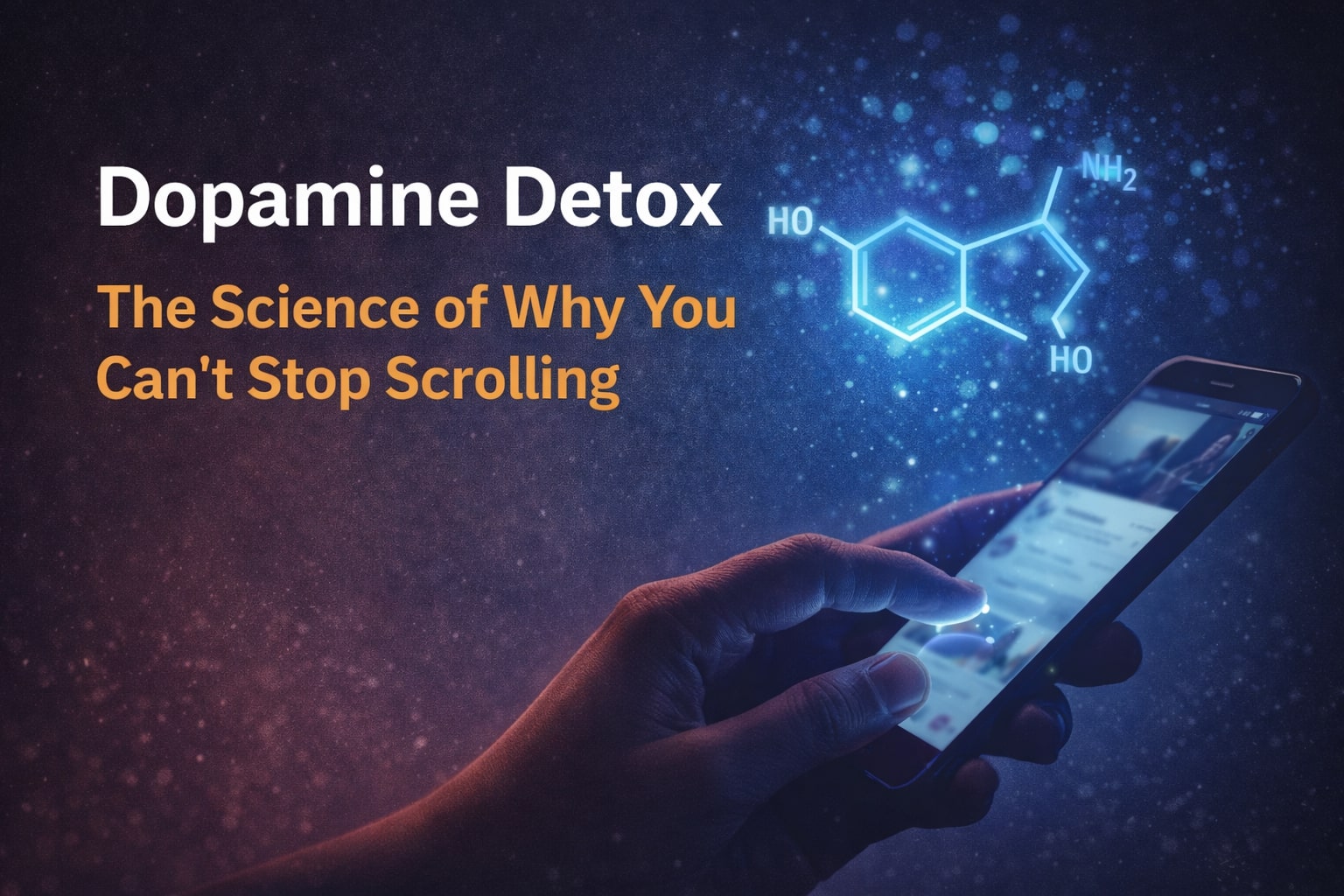
First, let's clear up the biggest misconception: dopamine isn't the "pleasure chemical." It's the wanting chemical. The anticipation chemical. The "do that again" chemical.
When you scroll social media, dopamine doesn't spike when you see something good it spikes in the anticipation of possibly seeing something good. That's why you keep scrolling even when most posts are boring. Your brain is chasing the unpredictable reward, not the reward itself.
This is called a "variable reward schedule," and it's the same mechanism that makes slot machines addictive. You never know when the next post will be the one that goes viral, the one that makes you laugh, the one that gives you that hit.
Tech companies know this. Every infinite scroll, every notification ping, every like counter is designed to exploit this exact neurological vulnerability. Former Google design ethicist Tristan Harris calls it "a race to the bottom of the brain stem."
Explore related topics: clickbait psychology and binge-watching behavior.
📺 Featured Video
Dopamine Expert: Doing This Once A Day Fixes Your Dopamine
by The Diary Of A CEO
10 Signs Your Dopamine System Is Hijacked
- You check your phone within 5 minutes of waking up - Before coffee, before bathroom, before anything. The craving is that strong.
- You feel anxious without your phone nearby - Even when you don't need it, not having it creates genuine discomfort.
- You've lost hours to "quick" social media checks - What started as a 2-minute break became a 45-minute scroll session.
- Normal activities feel boring - Books, conversations, nature nothing hits like the constant stimulation of your phone.
- You eat while watching something - Meals without screens feel incomplete or boring.
- You have multiple unfinished shows/games/books - Starting new things is exciting; finishing them isn't.
- You struggle with tasks that don't give instant feedback - Long-term projects feel impossible without immediate rewards.
- You refresh feeds hoping for new content - Even when you just checked 30 seconds ago.
- You feel empty after social media sessions - The dopamine crash leaves you feeling worse than before.
- Your attention span has noticeably decreased - You can't watch a movie without checking your phone.
Why Traditional Dopamine Detoxes Don't Work
The viral "dopamine detox" trend suggests avoiding all pleasurable activities for a day or more to "reset" your dopamine levels. The theory sounds logical, but neuroscience doesn't support it.
The Problems:
- Dopamine levels don't actually "deplete" from use
- Receptor sensitivity changes take weeks to months, not days
- Complete abstinence often leads to binging afterward
- You can't actually avoid dopamine it's involved in all motivation
What Actually Works:
The real solution isn't detox it's retraining your reward circuits through consistent behavioral changes:
- Increase friction for bad habits - Delete apps, use app blockers, charge your phone in another room
- Decrease friction for good habits - Make healthy activities easier than unhealthy ones
- Practice single-tasking - Train your brain to get dopamine from sustained attention
- Embrace boredom - Your brain needs periods of low stimulation to reset baseline expectations
- Replace, don't remove - Fill the void with activities that give sustainable satisfaction
📺 Featured Video
Brainrot is Ruining You | Documentary Film
by Aevy TV
A Science-Based Plan to Reclaim Your Brain
Here's a practical protocol based on actual neuroscience research:
Week 1-2: Reduce the Damage
- Install app usage trackers to see the reality
- Turn off all non-essential notifications
- Set phone to grayscale mode (removes visual appeal)
- No phone for first hour after waking
Week 3-4: Build New Patterns
- Start a daily activity that requires sustained focus (reading, exercise, craft)
- Practice "urge surfing" notice cravings without acting on them
- Schedule specific times for social media (2x daily for 20 minutes)
- Add friction: log out of apps after each use
Week 5+: Maintain and Adjust
- Weekly reflection on usage patterns
- Gradually reduce scheduled social media time
- Find in-person social activities to replace online connection
- Consider a monthly "digital sabbath"
The goal isn't to eliminate technology it's to use it intentionally rather than compulsively. When you control your attention, you control your life.
📺 Featured Video
Impact of Screen Time on Kids' Brains
by TODAY